

Bara Imambara, also called Asafi Imambara, is a historic complex in Lucknow built by Nawab Asaf-ud-Daula. Its central hall, mosque, stepwell and Bhul Bhulaiya labyrinth make it a substantial old-city visit, with nearby monuments to add to your route.
- Location: Lucknow’s Hussainabad area.
- Complex highlights: the central hall, Asfi mosque, Bowli stepwell and Bhulbhulaiya.
- Ticket basics: the labyrinth is part of Bara Imambara, not a separate monument.
- Planning note: published opening information differs, so confirm arrangements before setting out.
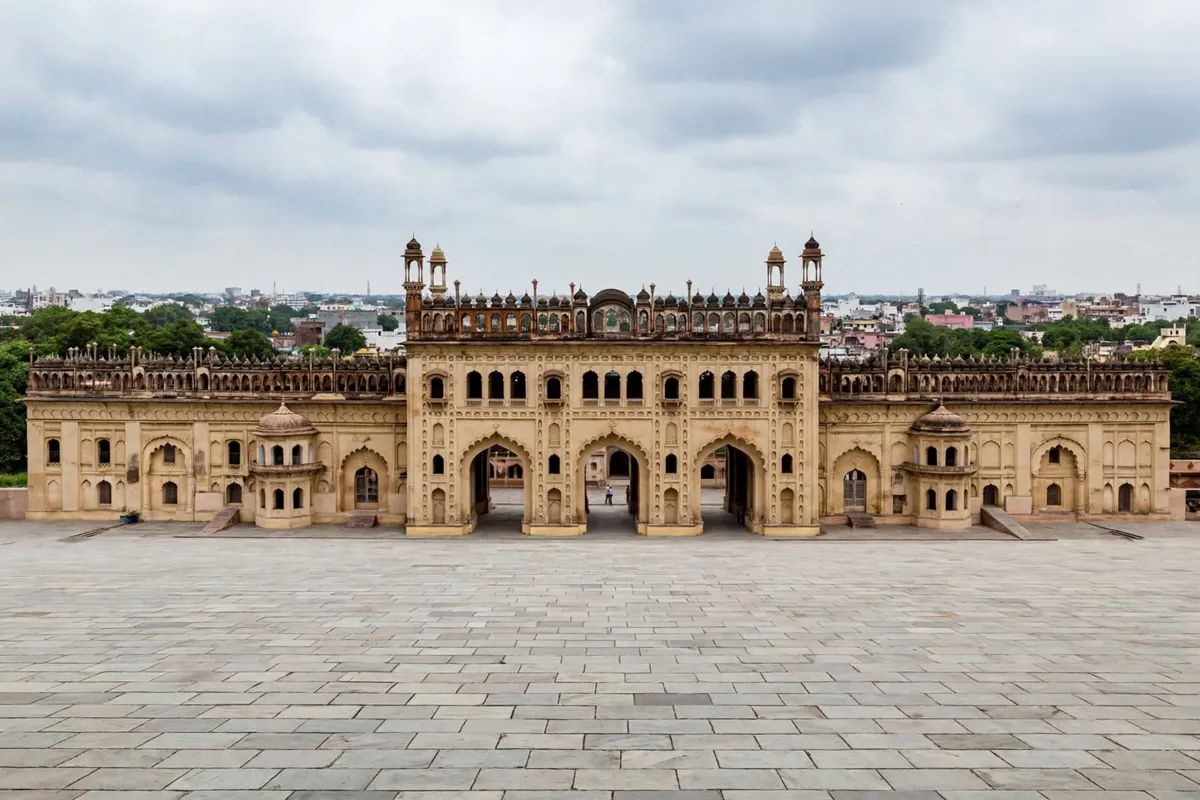
What to see at Bara Imambara
Bara Imambara brings together a large central hall, two gateways, a mosque, a stepwell and the labyrinth within one complex. Begin with the main hall, then use the courtyards and gateways to orient yourself before visiting the other features.
Construction began in 1785 and was completed in 1791. The Uttar Pradesh government’s NRI Department describes the project as famine relief that provided work for people in the region.
The central hall is 50 meters long and 15 meters high. Its interlocking bricks support the structure without girders or beams, making the hall a defining part of the complex. Two imposing gateways lead to it.
The Asfi mosque is also called Asafi Masjid in some visitor information. The Bowli, or Shahi Baoli, is a stepwell. These features sit alongside the Bhulbhulaiya, so you can plan them as parts of one visit rather than separate attractions.
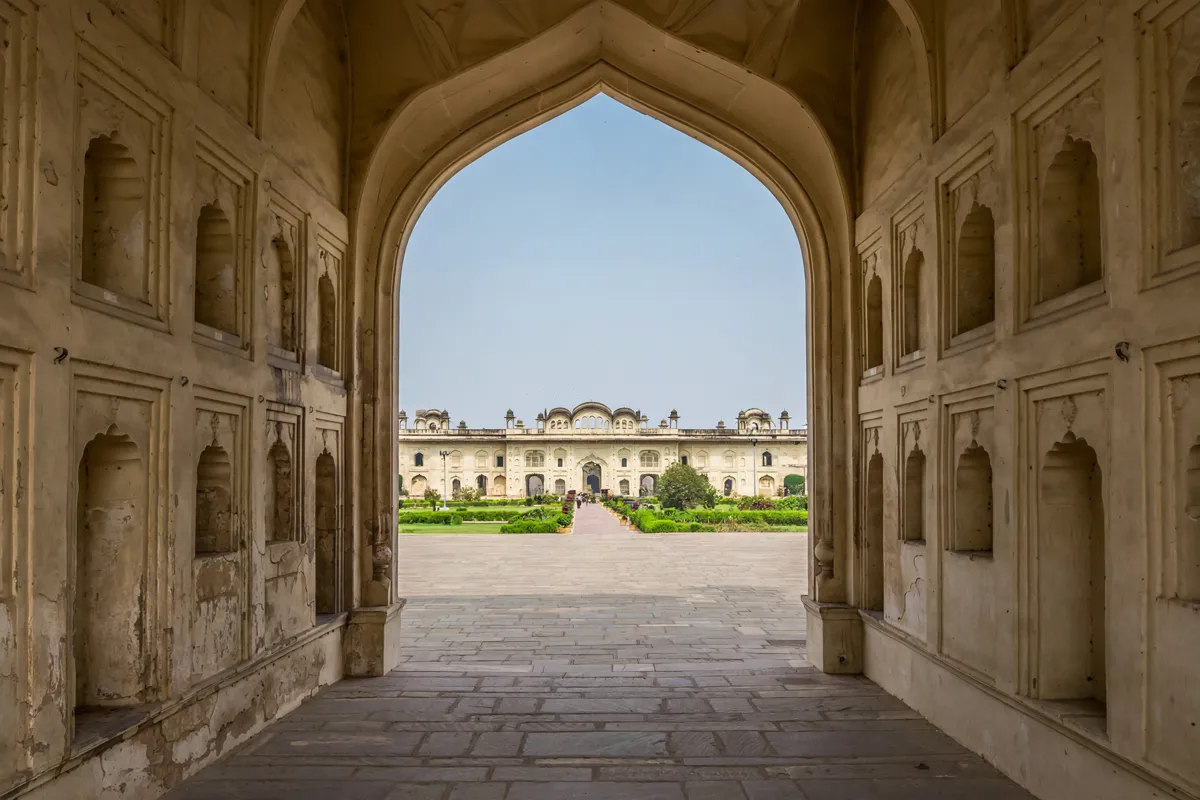
Understanding the Bhul Bhulaiya
The Bhul Bhulaiya is a labyrinth of twisting corridors within Bara Imambara, not a separate monument.
The name is often associated with a claim that the labyrinth has 1,024 pathways, but the commonly cited number is uncertain. Treat the Bhul Bhulaiya as one feature of the broader complex, and plan time for the central hall and other structures as well.
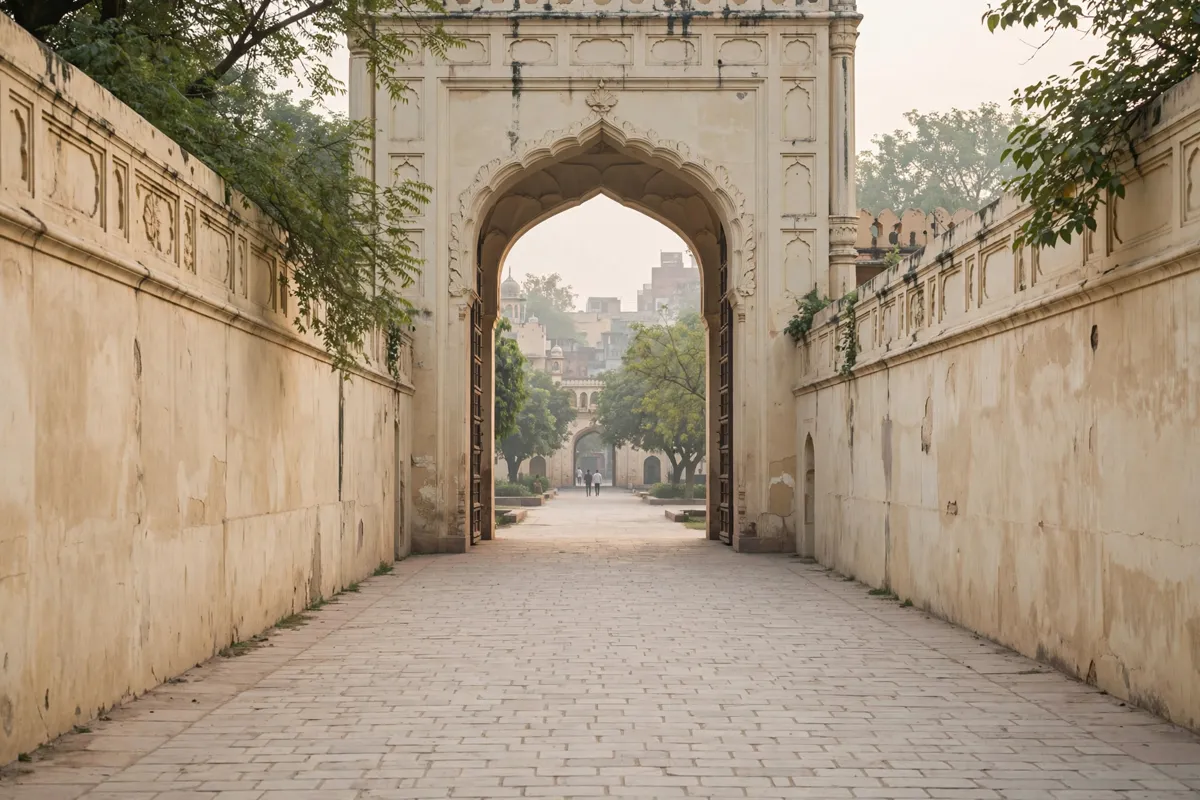
Tickets, guides and visitor rules
Day-visit passes are available online or at pass windows at both gates, and the ticketing terms identify the Bhul Bhulaiya as part of the Bara Imambara visit.
The Uttar Pradesh government’s NRI Department lists entry fees of ₹25 per person for Indian visitors and ₹300 per person for foreign tourists. Closure information differs between government tourism pages and ticketing terms. Before you go, check the official site for current hours, closure details and ticket arrangements.
Opening hours
- Monday to Sunday: 6:00–18:00
Last checked November 2026. Hours can change on holidays and for special events.
Filming on the Imambara premises is prohibited unless permission is obtained from the Police, District Magistrate or Chairman of the Husainabad and Allied Trust, Lucknow. If filming is part of your plans, arrange permission through one of those authorities before your visit.
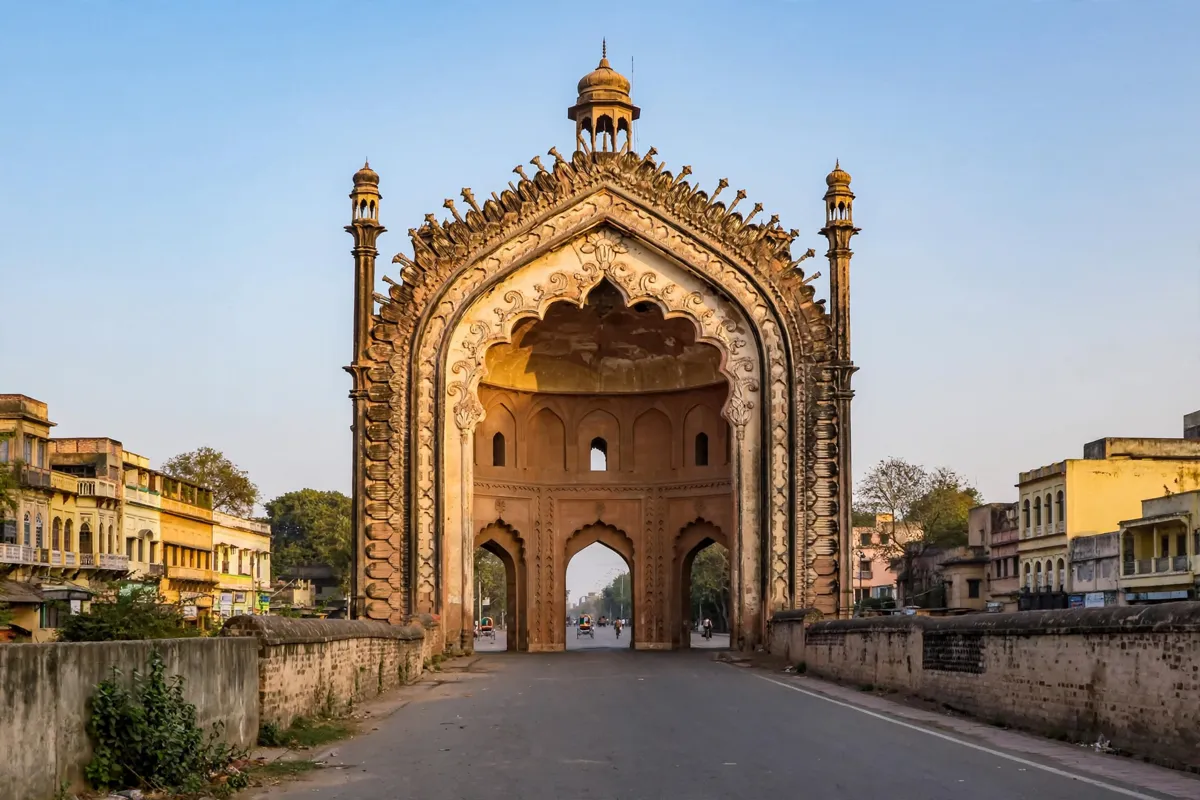
Pairing the visit with nearby monuments
Bara Imambara sits within Lucknow’s Hussainabad monument area, making it natural to combine with other old-city landmarks.
Rumi Darwaza is another landmark in this part of the city. You can build a broader route around the Chota Imambara and Rumi Darwaza.
The National Monuments Authority describes the Hussainabad Complex as spanning approximately 1.5 km along Hussainabad Trust Road, from Baba Imambara southeast to Jama Masjid southwest.
A one-day route through Lucknow’s old city can connect several sights.
Planning a trip from Charbagh
Hotel Europe Plaza is in Charbagh, and Charbagh Railway Station is about 3 minutes on foot from the hotel. If you’re arranging a city outing from this part of Lucknow, Europe Plaza, a three-star hotel in Charbagh, is one starting point; confirm your route to the old city before you leave.
The monument’s location in the Hussainabad area makes it possible to group the visit with nearby landmarks rather than treating it as a standalone stop. Check opening and ticket details before choosing the order of your day, since published schedules differ.
FAQs
What is Bara Imambara also called?
Bara Imambara is also known as Asafi Imambara. It was built by Nawab Asaf-ud-Daula.
Is the Bhul Bhulaiya a separate attraction?
No. It is part of the Bara Imambara complex, and the day-visit pass covers the complex rather than a separate monument ticket for the labyrinth.
What else is inside the complex?
The complex includes the central hall, Asfi mosque and a stepwell, as well as the labyrinth and two gateways.